

In traditional Mexican families, names aren’t just labels—they’re clues. Learn how understanding naming patterns can help you break down brick walls in your Mexican genealogy research.
In many traditional Mexican families, naming patterns were often followed when it came to naming children. Understanding these patterns can offer valuable clues about earlier generations and help you break through brick walls in your research.
Common Naming Patterns in Mexican Genealogy:
- Paternal and Maternal Surnames:
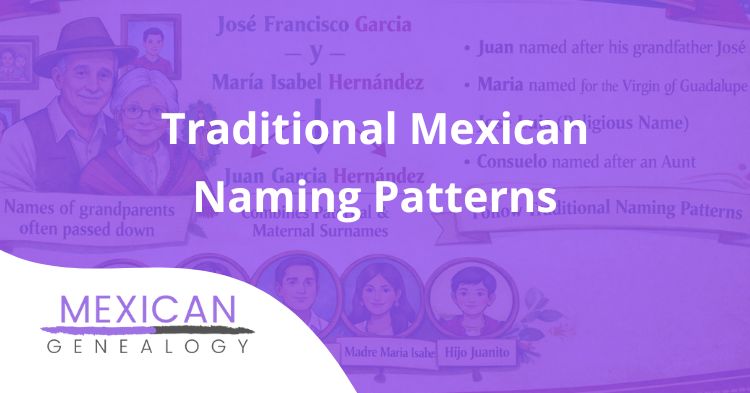
Mexican families follow a two-surname (apellidos) system. The first surname is the father’s surname (paternal surname), and the second is the mother’s surname (maternal surname). For example, if the father’s name is Juan García Pérez and the mother’s name is Maria Hernández López, their child would likely be named something like José García Hernández. This practice allows you to trace both sides of the family tree more easily, though understanding which surname is paternal or maternal is crucial. - Names Passed Down Through Generations:
- Grandparents’ Names: It is common for children to be named after their grandparents. For instance, the firstborn son might be named after his paternal grandfather, and the firstborn daughter might be named after her paternal grandmother. Similarly, subsequent children may be named after the maternal grandparents. Recognizing these patterns can help you deduce the names of an earlier generation even when direct records aren’t available.
- Parents’ Names: Parents’ names may also be passed down, particularly for firstborn children. A firstborn boy might take the name of his father or a firstborn girl the name of her mother.
- Religious Names:
- Many Mexican families, being deeply rooted in Catholicism, might name their children after saints. For example, María, José, and Jesús are extremely common. These names were sometimes combined with other names (e.g., María Guadalupe or José Luis) as a way to honor religious figures, especially local or family-devoted saints.
- In some cases, children received religious names that indicated the day or season of their birth. For example, a child born on December 12 might be named María Guadalupe in honor of the Feast of Our Lady of Guadalupe.
- Middle Names:
- Mexican families often give children middle names, which may reflect the name of a beloved ancestor or religious figure. In some cases, middle names could be used to distinguish between family members with similar or identical first names.
- When doing research, keep in mind that some people may have gone by their middle name rather than their first name. It’s common to find records where an ancestor might be listed with a different name than the one passed down through family stories.
- Honorific Naming:
- Another custom was to name a child after an important family member who had recently passed away, particularly a grandparent or a beloved uncle/aunt. This could indicate a strong familial bond or respect and provide clues about significant family members.
- If you notice a sudden appearance of a particular name in the family line, it could indicate a tribute to someone who had recently died.
- Unique or Indigenous Names:
- Depending on the region or ethnicity of the family, indigenous names (e.g., Nahuatl, Maya, or other native languages) might have been used. These names might have specific meanings tied to family history, geography, or cultural practices. If you encounter an indigenous name in your family tree, understanding its origin might give you clues about where your ancestors lived or their cultural affiliations.
How Naming Patterns Help in Genealogy:
- Filling in Gaps: If you’re missing records for a particular generation, recognizing naming patterns can help fill in the blanks. For example, if a firstborn son is named José, it could be a clue that the paternal grandfather was also named José.
- Distinguishing Between Individuals: In families where cousins or siblings may have similar or identical names, middle names or the order of surnames can help distinguish one person from another.
- Tracking Surnames Over Generations: Following the pattern of paternal and maternal surnames over multiple generations allows you to map out entire family lines, often going back many generations. It also helps in distinguishing between different family branches with similar names.
- Marriage Clues: When investigating marriage records, you may find that children named after grandparents could suggest a close relationship or influence from these grandparents, indicating geographic proximity or even potential godparent relationships.
Practical Tips for Using Naming Patterns:
- Study the entire family unit: Analyze the names of all siblings within a family, as the naming pattern might reveal the names of both sets of grandparents.
- Consider regional differences: Certain regions of Mexico or social classes might have different naming customs. For example, rural areas may follow different patterns than urban ones, and wealthier families might have a greater variety of names, influenced by European or other cultural naming conventions.
- Explore alternate spellings: As names were passed down, they might have been spelled differently in various records. Always search for alternate spellings of both given names and surnames to ensure you don’t miss crucial records.
- Examine religious records: Since many Mexican families are Catholic, baptismal, marriage, and burial records will often include the names of godparents (padrinos), who are frequently close family members like grandparents or aunts and uncles. The names of these padrinos can reinforce the use of family naming patterns.
By paying close attention to how names are passed down in your family, you can unlock generations of information hidden in plain sight. When combined with church and civil records, traditional naming patterns can help you uncover family connections, break through research walls, and deepen your understanding of your Mexican heritage.